

Ramon Alfredo Siochi, PhD, Director of Medical Physics
“What we can do for our state is bigger than what we can do for just our patients.”
Ramon Alfredo “Alf” Siochi, PhD, DABR, carved out an impressive career in the private health sector before shifting to an academic healthcare setting. A native of the Philippines, Dr. Siochi spent seven years working for Siemens Medical where he was named the company’s Inventor of the Year. He also picked up over 20 patents in radiotherapy during his time with Siemens.
Then he decided to make a career shift.
Looking to position himself closer to the source of change in the healthcare industry, Dr. Siochi combined his passions for education, physics, and radiology by moving to clinical work. Dr. Siochi, who has over two decades of teaching experience, serves as director of Medical Physics at the WVU Cancer Institute where he oversees the program from an academic level while ensuring quality control for radiation-producing devices and software administered to patients. He is also associate chair of Radiation Oncology.
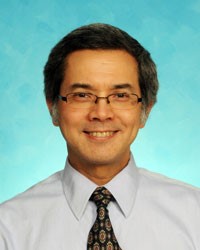
While his role is less patient facing than other members of staff, he still uses his expertise to aid those going through treatment. Dr. Siochi understands the complexity of technology and treatments available to patients, including brachytherapy, external beam therapy, and gamma knife radiosurgery, among others, and strives to make them feel as comfortable as possible during their treatment.
“My message to the patients is please ask questions of your medical physicist,” Dr. Siochi said. “If you have questions that are technical, don’t hesitate to ask for the medical physicist to come and explain things.”
Dr. Siochi earned a bachelor’s degree from Ateneo de Manilla University in 1985 before moving to the United States. He later earned his Doctor of Philosophy in condensed matter physics from Virginia Tech University and, a few years later, his master’s degree in radiological physics from the University of Cincinnati. After his time at Siemens, he went on to work at St. Jude Children’s Research Hospital and spent nearly a decade as an assistant professor and clinical associate professor at the University of Iowa before arriving in Morgantown in 2014.
Despite the constant need for medical physicists across the country, the limited supply in the industry has not kept up with the demand. Dr. Siochi is addressing this by helping to mentor and build up the next generation of physicists in West Virginia. His efforts will be aided by the WVU School of Medicine’s new medical physics residency program, the first of its kind in the state. The introduction of the program is a massive step that will allow certain graduates to stay in West Virginia after completing their training.
The program is just one of the many ways Dr. Siochi has continued to invest in the next generation. Since his arrival, he’s been involved in the community by speaking to high school students around the state about meaningful careers in healthcare. Regardless of which field they intend to pursue in the professional world, he enjoys sharing his passions with the region’s young minds.
“When I go and speak to high schools, I’m not only thinking about introducing what medical physics is,” Dr. Siochi said. “I’m also exciting these students to be thinking about STEM types of fields. Maybe they won’t become medical physicists, but maybe they’ll think about physics, biology, or science in general and maybe go into a field where there are other needs.”
Dr. Siochi’s position has allowed him to serve as a mentor to more than 30 students ranging from high schoolers to professionals in the field. One of his favorite aspects of his role is the ability to make a real difference for the next generation.
“What we can do for our state is bigger than what we can do for just our patients,” Dr. Siochi said. “Opening doors for young minds to enter into our medical profession is very important for our state.”