

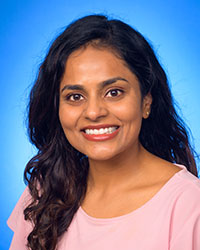
Meghana Singh, MD, Gastrointestinal Oncology
“When you care for a patient with a gastrointestinal cancer, you need a team around you of surgeons, radiation oncologists, pharmacists, and other specialists. That’s what we have at WVU Cancer Institute.”
A cancer diagnosis brings uncertainty and a long list of decisions. For gastrointestinal (GI) cancers, those decisions often begin quickly and have lasting consequences.
At WVU Cancer Institute, Meghana Singh, MD, works with patients throughout the process and helps coordinate care across a multidisciplinary team. She treats cancers of the colon, pancreas, liver, stomach, and esophagus.
“In oncology, we meet patients at one of the most critical times in their lives,” said Dr. Singh, a medical oncologist specializing in gastric cancer. “They are trying to process a new diagnosis and make decisions that affect their future. My role is to guide them through those decisions and provide a lot of support during this part of their journey.”
A Lifelong Path to Medicine
Dr. Singh’s path to medicine began early. Both of her parents are physicians, and conversations about patient care were part of daily life growing up in India.
“I wanted to become a doctor for as long as I can remember,” she said. “My mom and dad would talk about their patients at home, and I would sometimes go with them on rounds. It always felt natural to be part of that environment, and I never really imagined myself doing anything else.”
While she knew she wanted to practice medicine, Dr. Singh took time to decide on a specialty. During medical school, she was drawn to oncology, where she could work through complex diagnoses and build long-term relationships with patients.
She later chose to specialize in gastrointestinal oncology, a field that continues to evolve rapidly.
“There’s new research coming out almost every day, and we’re seeing significant advances across many types of GI cancers,” she said. “That’s a big part of what drew me to this field.”
Advancing Care in GI Oncology
Dr. Singh sees patients both in the clinic and in the hospital.
“From their very first appointment, I want patients to feel informed and involved in their care,” she said. “We talk through all of the options and what each one means, including how it might affect their quality of life.”
She encourages patients to include family members in those discussions and considers both medical and personal factors when developing a treatment plan.
Improving Access Across West Virginia
Since joining WVU Medicine in 2025, Dr. Singh has gained a deeper understanding of the challenges many people face in accessing care.
“That was one of the things that surprised me when I began my practice at WVU Medicine,” she said. “Many patients travel long distances, sometimes every week, while they are going through treatment. That adds another layer of difficulty at an already challenging time in their lives.”
WVU Medicine continues to expand access through satellite clinics, coordinated appointments, and telehealth when appropriate.
“We want to make treatment easier to access, so patients do not have to travel as much,” she said. “Even small changes can make a difference when someone is coming in frequently for treatment.”
Joining WVU Cancer Institute
Dr. Singh joined WVU Medicine after completing her fellowship at UPMC Hillman Cancer Center in Pittsburgh. She appreciates the collaborative culture and opportunity to contribute to a growing program.
“When you care for a patient with a gastrointestinal cancer, you need a team around you of surgeons, radiation oncologists, pharmacists, and other specialists,” she said. “That’s what we have at WVU Cancer Institute. The medical team works together closely and is so welcoming and friendly. It’s meant a lot to me early in my career.”
Life Outside Medicine
Outside of work, Dr. Singh spends much of her time with her husband and young child. She enjoys being outdoors, whether walking or hiking, and makes time for reading when she can.
Today, she still talks with her parents about medicine, but the conversations are different.
“I finally have my own patients to discuss, and that has changed things,” she said. “Now, when we talk, my parents don’t always have input because I’m in a different field, but they’re kind of in awe of what I’m doing. I love that.”