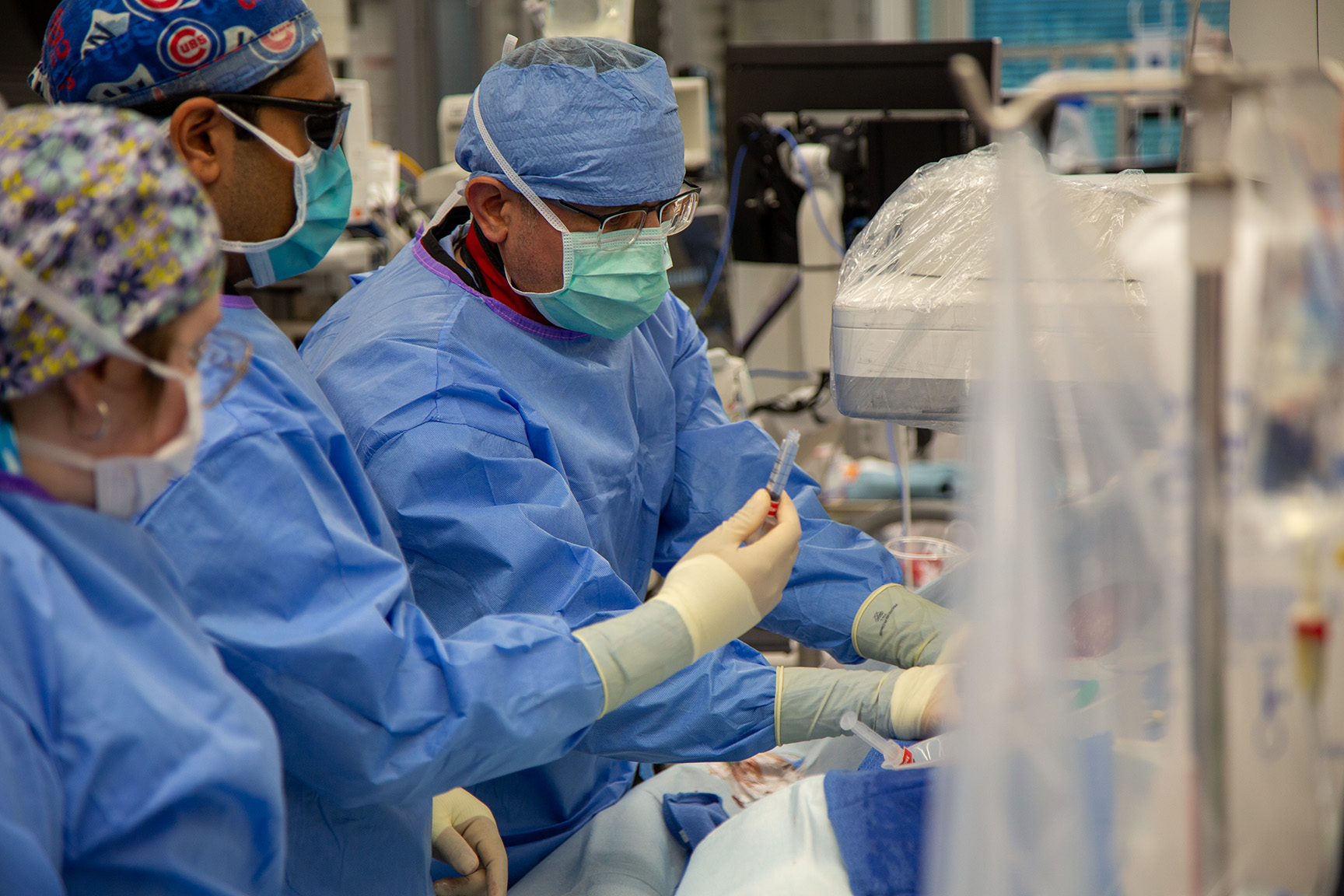
Interventional Cardiology
At the WVU Heart and Vascular Institute, our interventional cardiology team combines advanced technology, 24/7 cardiac labs, and expert physicians to quickly diagnose and treat heart conditions – day or night. Using catheter-based, minimally invasive techniques, we restore blood flow, repair damaged heart valves, and help patients avoid open-heart surgery whenever possible.
Why Choose the WVU Heart and Vascular Institute for Interventional Cardiology?
We have refined our coordination and teamwork to a science. At the WVU Heart and Vascular Institute, our interventional cardiologists provide advanced, nonsurgical treatment for heart conditions using catheter-based techniques to diagnose and restore blood flow by treating blockages in and around the heart. Our board-certified interventional cardiologists collaborate seamlessly with emergency teams and cardiac surgeons to deliver rapid, lifesaving care, especially for heart attacks and other urgent conditions.
Treatments and Procedures We Offer
Our program provides a wide range of nonsurgical, catheter-based therapies, including:
- Atherectomy for plaque removal
- Balloon valvuloplasty to open narrowed heart valves
- Cardiac resynchronization therapy for advanced heart failure
- Chronic total occlusion (CTO) interventions using cutting catheter technology
- Transcatheter Aortic Valve Replacement (TAVR)
- Protected TAVR with cerebral embolic protection
- Transcatheter mitral valve edge-to-edge repair (MitraClip™ and related devices)
- Transcatheter mitral valve replacement
- Transcatheter left atrial appendage closure (WATCHMAN™, Amulet™, and other devices)
Protected TAVR: Reducing Stroke Risk During Valve Replacement
The WVU Heart and Vascular Institute is one of only a few programs in the country – and the only one in West Virginia – to offer Protected Transcatheter Aortic Valve Replacement (TAVR) using the Sentinel™ Cerebral Protection System.
During TAVR, calcium or plaque from the aorta may break loose and travel to the brain, raising stroke risk. The Sentinel system reduces this risk by capturing debris before it reaches the brain.
How Protected TAVR Works:
- The Sentinel system is placed through a small wrist puncture.
- Two tiny filters are guided via catheter into the main brain arteries.
- The filters capture any debris released during valve replacement.
- After the procedure, the filters and trapped material are removed.
Clinical studies show that Sentinel reduces stroke risk by up to 63 percent and successfully captures debris in 99 percent of TAVR procedures. WVU Heart and Vascular Institute was selected as one of just 10 U.S. centers to adopt this innovative approach.
Coronary Intervention Overview
Watch “Coronary Intervention Overview” with Vikrant Jagadeesan, MD, for a deep dive into how our interventional cardiology program provides advanced, patient-centered care for coronary artery disease and other complex heart conditions.
Faculty
See All Faculty
Ramesh Daggubati, MD

J.W. Ruby Memorial Hospital (Main Campus)



Berkeley Medical Center Dorothy McCormack Center