

Spinal Disorders and Injury
Using the latest techniques and technologies to treat spinal disorders and injuries
What We Do
The WVU Rockefeller Neuroscience Institute Department of Neurosurgery provides comprehensive care for spine disorders and spine injuries, including:
- Herniated disc
- Lumbar spondylolisthesis
- Osteoporosis of the spine
- Spinal deformities
- Spinal cord injury (SCI)
- Tethered spinal cord
- Spine and spinal cord tumors
- Lumbar spinal stenosis
- Syrinx
- Spinal cord disorders
- Metastatic spine cancer
- Chiari malformation
Who We Are
The spine team at the WVU Rockefeller Neuroscience Institute provides compassionate, expert care for patients with spinal disorders. Our team offers advanced treatments, including minimally invasive and robotic assisted surgery, to help patients recover faster and return to their daily lives. We care for the full range of spinal conditions and are committed to improving outcomes through innovation, research, and education. Our team has grown to become a national destination for complex surgeries and expanded research infrastructure for innovations in technology.
Using the latest minimally invasive techniques and technologies for better outcomes
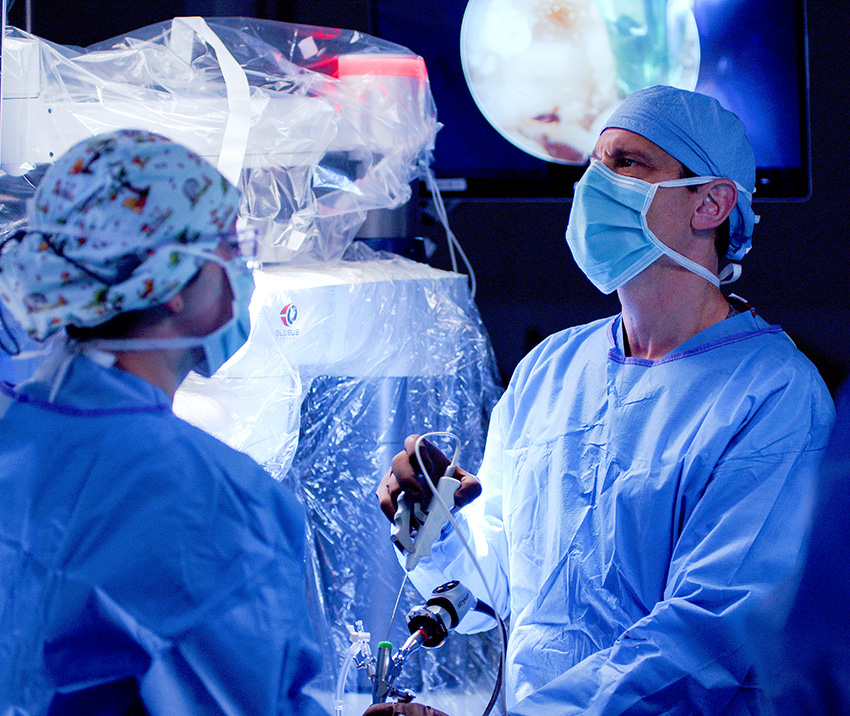
Endoscopic Spine Surgery
The Spine Division at the WVU Rockefeller Neuroscience Institute has the only surgeons in West Virginia who are performing robotic-assisted endoscopic spine surgeries. Robotic-assisted endoscopic spine surgery is one of the advanced techniques in spinal surgery that offers unique benefits and applications. This technique can reduce the risk of complications and improve surgical outcomes. This minimally invasive approach allows for direct visualization of the surgical site, reduced tissue damage, and faster recovery.
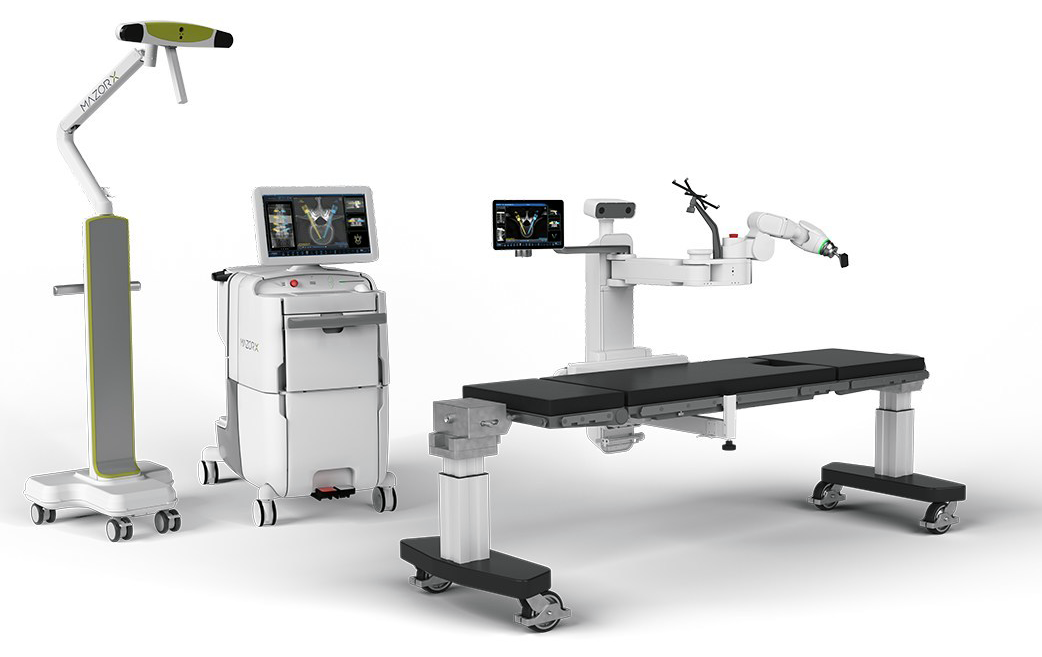
MazorX Robot
The Medtronic Mazor X robot uses a navigated robotic guidance system for spine surgery, enabling precise placement of surgical instruments and implants during procedures like fusions, tumor removals, and fracture repairs. It combines robotic arm guidance with integrated software for surgical planning and real-time navigation, allowing for customized, predictable, and potentially less invasive procedures with greater accuracy.
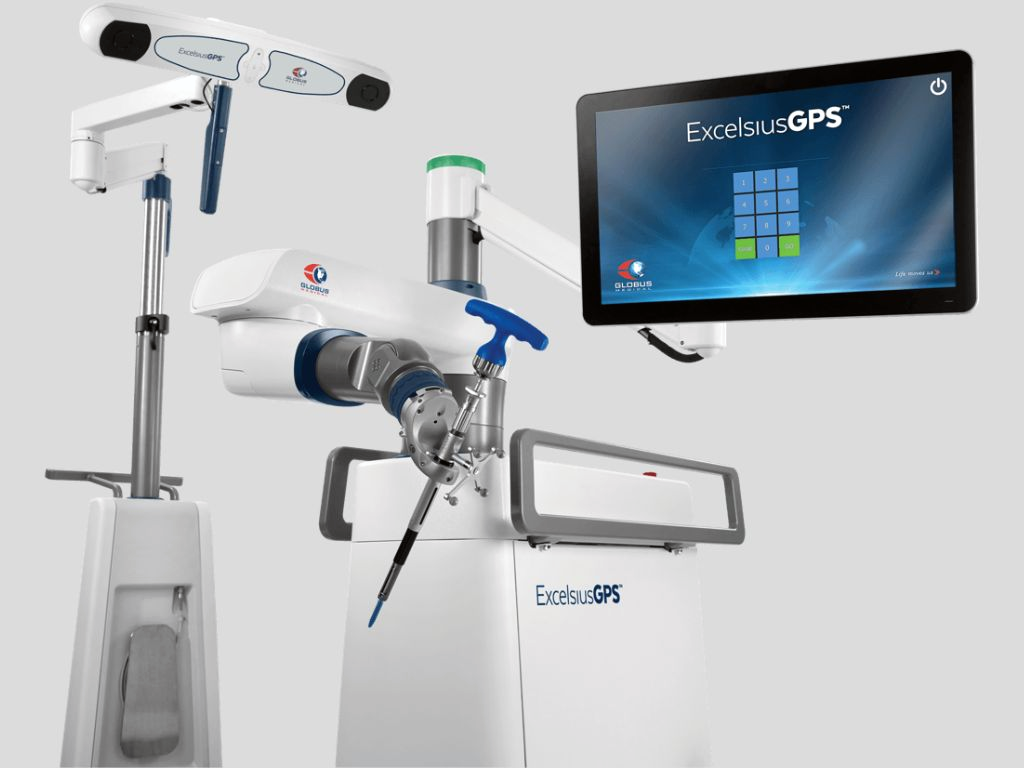
ExcelsiusGPS Spine Robot
The Globus ExcelsiusGPS™ Spine Robot is designed to improve alignment accuracy and optimize patient care by combining a rigid robotic arm and full navigation capabilities into one adaptable platform. The system may be utilized for robotic navigation and guidance, or for navigation. ExcelsiusGPS™ also provides real-time trajectory guidance and visualization of integrated instruments and implants, creating safety redundancies throughout the procedure to help maintain navigational integrity.
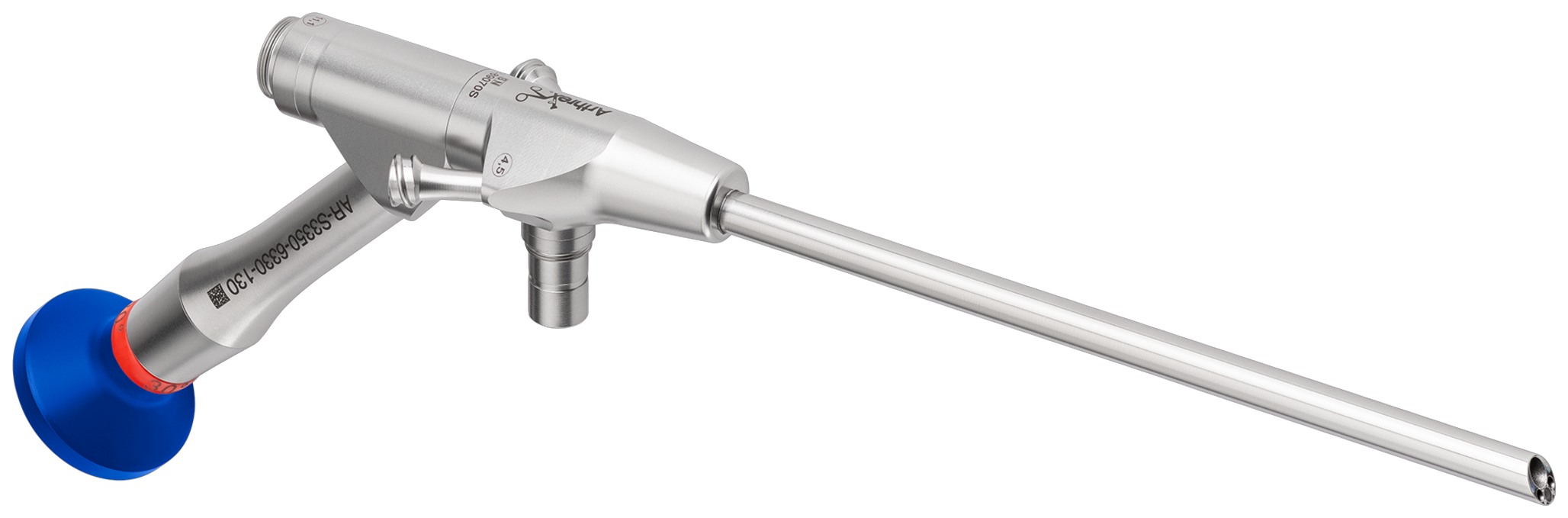
Arthrex Endoscope
An ultra-minimally invasive treatment option designed to restore function, preserve motion, and minimize pain, this specially designed endoscope, which is about the width of a pencil tip, allows our surgeons to view and reach small areas of the spine without the need for the large incision required for traditional back surgery. This minimizes disruption and damage to muscles responsible for stabilizing the back and reduces the need to remove bone.
Clinical Leadership
See all Neurosurgery Faculty
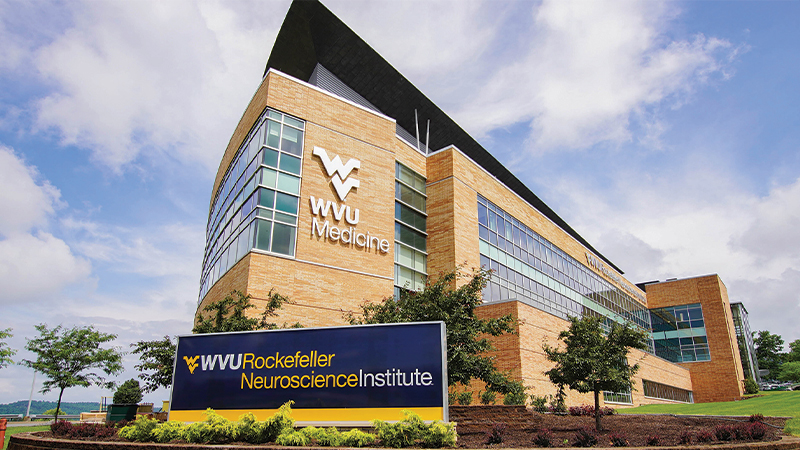
We are located in the WVU Rockefeller Neuroscience Institute outpatient clinics located on the sixth floor of the Physician Office Center in Morgantown, West Virginia.
Office hours: Monday – Friday, 8 am – 5 pm
Referrals
Our faculty is committed to providing immediate consultations and care for your patients. For physician-to-physician consultations, or to refer your patient, please visit the WVU Medicine Provider Hub for referral forms and more or call our Medical Access Referral Systems (MARS) at (800) 982-6277.