
Dermatology Care for Every Skin, Every Age
WVU Medicine Camden Clark Dermatology provides expert care for adults and children, treating everything from acne and eczema to suspicious moles and skin cancer screenings. With modern diagnostic tools and compassionate providers, we make it easier to get the answers (and treatment plan) you need—close to home.
Comprehensive Skin Care—Medical, Surgical, and Preventive
Your skin is your body’s largest organ—and changes to it can affect your health, comfort, and confidence. Our dermatology team helps patients manage chronic skin conditions, treat sudden rashes or infections, and identify potentially serious concerns early through routine skin checks and advanced evaluation. Whether you’re dealing with a long-term condition like psoriasis or you’ve noticed a changing spot that needs attention, we’re here with expert care and a personalized approach.
Conditions We Treat
- Psoriasis
- Rosacea
- Hair and nail disorders / hair loss
- Warts
- Rashes of all kinds
- Actinic keratosis
- Shingles and other viral skin conditions
- Eczema (atopic dermatitis) and dry skin
- Contact dermatitis and allergic skin reactions
- Moles and skin growths
- Seborrheic dermatitis (dandruff / scalp issues)
- Skin cancer screenings and evaluation
- Melanoma and non-melanoma skin cancers (basal and squamous cell carcinoma)
- Botox for Cosmetics
- Hair loss conditions
- Lupus
- Dermatomyositis
- Bullous Diseases
- other autoimmune skin conditions
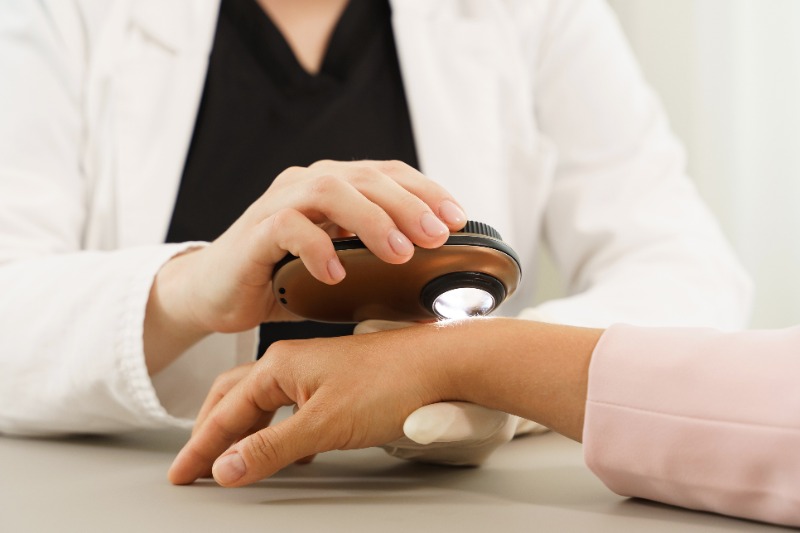
Skin Cancer Screening Saves Lives
Skin cancer is one of the most common cancers in the U.S., and early detection can make a major difference. Our providers perform thorough evaluations and recommend the right next steps if anything looks suspicious—whether that’s monitoring, treatment, or biopsy. If you’ve noticed changes in a mole, growth, or spot, don’t wait to get it checked.
Dermatology FAQs
We know skin concerns can feel stressful—especially when symptoms are uncomfortable or changing quickly. Here are a few common questions we hear from patients.