
340B Drug Pricing Program
The savings from the 340B Program are important to all the hospitals that
make up the West Virginia University Health System (WVUHS), but they
are of vital importance to the small, rural, critical access hospitals with 25
beds or less that depend on 340B savings to keep their doors open.
340B Defined
According to the U.S.Health Resources and Services Administration:
“The 340B Program enables covered entities to stretch scarce federal resources as far as possible, reaching more eligible patients and providing more comprehensive services.
Manufacturers participating in Medicaid agree to provide outpatient drugs to covered entities at significantly reduced prices.
Eligible healthcare organizations/covered entities are defined in statute and include HRSA-supported health centers and look-alikes, Ryan White clinics and State AIDS Drug Assistance programs, Medicare/Medicaid Disproportionate Share Hospitals, children’s hospitals, and other safety net providers.
To participate in the 340B Program, eligible organizations/covered entities must register and be enrolled with the 340B program and comply with all 340B Program requirements. Once enrolled, covered entities are assigned a 340B identification number that vendors verify before allowing an organization to purchase 340B discounted drugs.”
(Source:HRSA.gov/OPA)
The WVU Health System and 340B
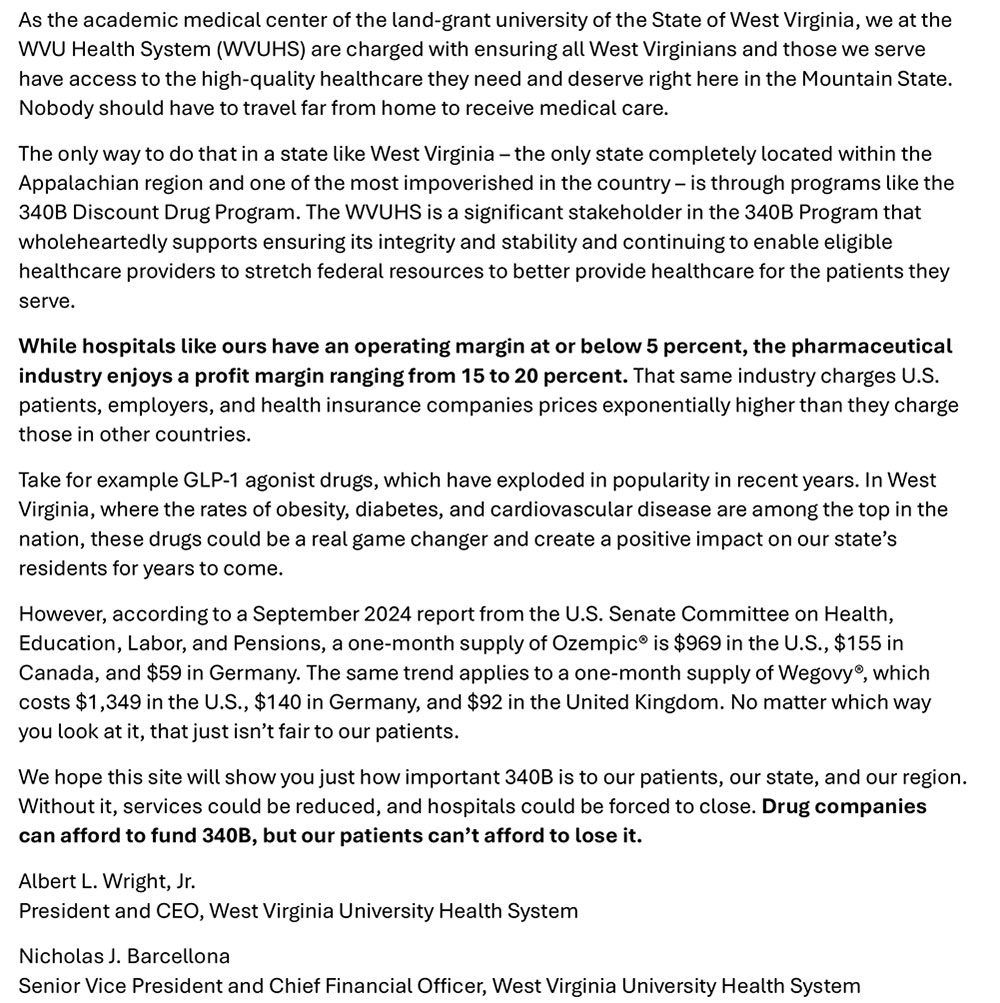
The West Virginia University Health System (WVUHS), which operates under the brand WVU Medicine, is an academic hospital system located primarily in the underserved state of West Virginia. The WVUHS consists of nine Disproportionate Share Hospitals, nine Critical Access Hospitals, and one Rural Referral Center.
Our System is one of the largest employers in West Virginia with 33,311 employees and affiliated physicians. Care is delivered at 24 member hospitals with associated clinics, one managed hospital, and five institutes, located primarily in West Virginia with additional locations in Ohio, Pennsylvania, and Maryland. As one of the largest health systems in West Virginia, the WVUHS maintains 3,244 licensed beds with more than 149,977 annual discharges.
(Numbers as reported in the 2023 WVU Medicine Annual Report)
Our Mission
The mission of the WVUHS is to improve the health of West Virginians and all we serve through excellence in patient care, research, and education. The 340B Program enables the WVUHS to achieve its mission by stretching scarce Federal Resources as far as possible, while delivering high quality healthcare services to vulnerable patient populations, including low-income, uninsured, underinsured, and homeless patients, as well as those living in rural communities.
The WVUHS is committed to providing comprehensive medical services to all patients regardless of their ability to pay, including a full spectrum of inpatient services, surgical services, and outpatient services such as Emergency Medicine, Trauma, Cancer Care, Infusion Services, Specialty Pharmacy Services, and Behavioral Health Services. The 340B Program has allowed the WVUHS to expand access to care across the states it serves, while focusing on safe, cost-effective care that results in improved patient outcomes.
By the Numbers
Information provided is for fiscal year 2023.
Our Health System
- Uncompensated Care = $117,422,634
- Total Employees = 33,311
Care and Access
- Physicians = 1,648
- Medical Residents and Fellows = 570
- Pharmacy Staff = 620
- Bedside Nurses (full-time) = 6,684
- Hospitals = 24
- Member Health Plan = 33,000
- Ambulatory and Hospital Telemedicine Sites = 46
Health and Service
- Inpatient
- Surgeries = 45,295
- MRI = 31,943
- Lab Services = 4,711,682
- Outpatient
- Surgeries = 142,458
- MRI = 80,572
- Lab Services = 8,294,270
- Clinic Visits = 4,359,981
- Hospital Outpatient Visits = 151,204
- ED Visits = 514,705
- Births = 8,128
- Discharges = 149,977
Community Benefit
The WVUHS provides high quality, academic based healthcare to the residents of West Virginia and several bordering states, ensuring that healthcare is available to all, regardless of income, health insurance, or ability to pay. We support the community through patient care financial assistance, education, research, and community investment. As a policy, all the 340B benefit created by each Covered Entity that is affiliated with WVUHS is returned to the Covered Entity where it originated, so it can meet the local acute and chronic needs of the patients who utilize that Covered Entity.
WVUHS Covered Entity
| WVUHS Covered Entity (alphabetically) | Location | Type | 340B ID |
| Barnesville Hospital | Barnesville, OH | Critical Access Hospital | CAH361321 |
| Braxton County Memorial Hospital | Gassaway, WV | Critical Access Hospital | CAH511308 |
| Camden-Clark Memorial Hospital dba Camden Clark Medical Center | Parkersburg, WV | Disproportionate Share | DSH510058 |
| City Hospital dba Berkeley Medical Center | Martinsburg, WV | Disproportionate Share | DSH510008 |
| Community Health Associates dba Jackson General Hospital | Ripley, WV | Critical Access Hospital | CAH511320 |
| Grant Memorial Hospital | Petersburg, WV | Critical Access Hospital | CAH511316 |
| GRMC, Inc. dba Garrett Regional Medical Center | Oakland, MD | Disproportionate Share | DSH210017 |
| Harrison Community Hospital | Cadiz, Ohio | Critical Access Hospital | CAH361311 |
| Jefferson Medical Center | Ranson, WV | Critical Access Hospital | CAH511319 |
| Potomac Valley Hospital | Keyser, WV | Critical Access Hospital | CAH511315 |
| Princeton Community Hospital | Princeton, WV | Disproportionate Share | DSH510046 |
| Reynolds Memorial Hospital | Glen Dale, WV | Disproportionate Share | DSH510013 |
| St. Joseph’s Hospital | Buckhannon, WV | Critical Access Hospital | CAH511321 |
| Thomas Memorial Hospital | South Charleston, WV | Disproportionate Share | DSH510029 |
| Uniontown Hospital | Uniontown, PA | Disproportionate Share | DSH390041 |
| United Hospital Center | Bridgeport, WV | Disproportionate Share | DSH510006 |
| West Virginia Health Care Cooperative, Inc. dba Summersville Regional Medical Center | Summersville, WV | Critical Access Hospital | CAH511322 |
| West Virginia University Hospitals | Morgantown, WV | Disproportionate Share | DSH510001 |
| Wheeling Hospital | Wheeling, WV | Rural Referral Center | RRC510050 |
WVUHS Covered Entity Types Defined
Critical Access Hospital (CAH): According to the Centers for Medicaid and Medicare Services (CMS), a Medicare-participating hospital must meet the following criteria to be designated by CMS as a CAH:
- Be located in a State that has established a State Medicare Rural Hospital Flexibility Program;
- Be designated by the State as a CAH;
- Be located in a rural area or an area that is treated as rural;
- Be located either more than 35-miles from the nearest hospital or CAH or more than 15 miles in areas with mountainous terrain or only secondary roads; OR prior to January 1, 2006, were certified as a CAH based on State designation as a “necessary provider” of healthcare services to residents in the area.
- Maintain no more than 25 inpatient beds that can be used for either inpatient or swing-bed services;
- Maintain an annual average length of stay of 96 hours or less per patient for acute inpatient care (excluding swing-bed services and beds that are within distinct part units);
- Demonstrate compliance with the CAH CoPs found at 42 CFR Part 485 subpart F; and
- Furnish 24-hour emergency care services 7 days a week;
- A CAH may also be granted “swing-bed” approval to provide post-hospital Skilled Nursing Facility-level care in its inpatient beds.
- In the case of hospice care, a hospice may contract with a CAH to provide the Medicare hospice hospital benefit. Reimbursement from Medicare is made to the hospice. The CAH may dedicate beds to the hospice, but the beds must be counted toward the 25-bed maximum. However, the hospice patient is not included in the calculation of the 96-hour annual average length of stay. The hospice patient can be admitted to the CAH for any care involved in their treatment plan or for respite care. The CAH negotiates reimbursement through an agreement with the hospice.
- In addition to the 25 inpatient CAH beds, a CAH may also operate a psychiatric and/or a rehabilitation distinct part unit of up to 10 beds each. These units must comply with the Hospital Conditions of Participation.
Rural Referral Center
According to HRSA, Rural Referral Centers are high-volume acute care rural hospitals that treat a large number of complicated cases. The Centers for Medicare and Medicaid Services classifies hospitals as Rural Referral Centers. To be eligible to participate in the 340B Drug Pricing Program, Rural Referral Centers must meet the requirements of 42 USC 256b(a)(4)(L)(i). To be eligible to participate in the 340B Program and purchase outpatient drugs at significantly discounted prices, Rural Referral Centers must be one of the following classifications:
- A private nonprofit hospital under contract with state or local government to provide healthcare services to low-income individuals who are not eligible for Medicare or Medicaid; or
- Owned or operated by a unit of state or local government; or
- A public or private nonprofit corporation that is formally granted governmental powers by a unit of state or local government.
Disproportionate Share
According to the Health Resources and Services Administration (HRSA), Disproportionate Share Hospitals serve low-income patients and receive payments from the Centers for Medicare & Medicaid Services to cover the costs of providing care to uninsured patients. To be eligible to participate in the 340B Drug Pricing Program, Disproportionate Share Hospitals must meet the requirements of 42 USC 256b(a)(4)(L). Disproportionate Share Hospitals must be classified as one of these:
- A private nonprofit hospital under contract with state or local government to provide healthcare services to low-income individuals who are not eligible for Medicare or Medicaid;
- Owned or operated by a unit of state or local government;
- A public or private nonprofit corporation that is formally granted governmental powers by a unit of state or local government;
- And must have a disproportionate share adjustment percentage greater than 11.75% for the most-recently filed cost report.

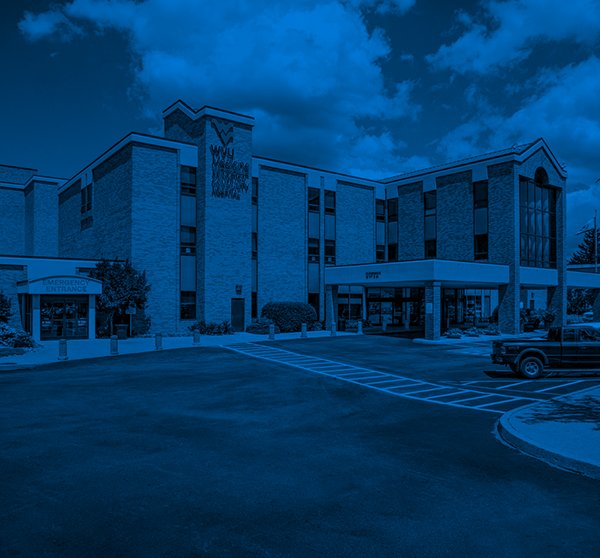
340B in Action: WVU Hospitals
WVU Hospitals, Inc. (WVUH), based in Morgantown, West Virginia, is the largest hospital in the WVU Medicine family, providing the most advanced level of care available to the citizens of West Virginia and bordering states. WVUH staff consists of highly trained, dedicated professionals, who are experienced in the latest techniques and technologies and the art of caring.
The 340B Program enables WVUH to achieve its mission by stretching scarce federal resources as far as possible while delivering high quality healthcare to vulnerable patient populations, including low-income, uninsured, underinsured, and homeless patients, as well as those living in rural communities.
WVUH provides comprehensive medical services, including a full spectrum of inpatient services, surgical services, and outpatient services, such as Emergency Medicine, Trauma Care, Cancer Care, Infusion Services, and Behavioral Health Services, to all patients, regardless of their ability to pay.
The 340B Program has allowed WVUH to expand access to care while focusing on safe, cost-effective care that results in patient outcomes.
WVUH’s 340B Statistics for 2022:
- Approximate Annual 340B Savings: $117,256,896
- Unreimbursed/Uncompensated Care: $117,422,634
- Approximate DSH Percentage: 22.6%
- Poverty Level in West Virginia: 17.9%
Use of 340B Savings:
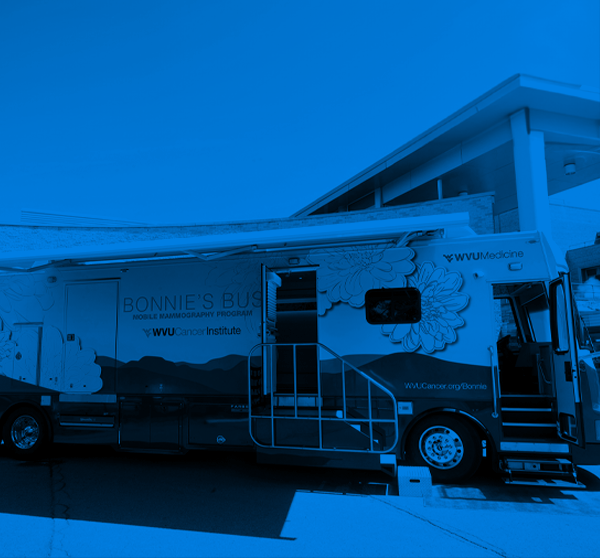
- Bonnie’s Bus Mobile Mammography Program
- Diabetes Support Group
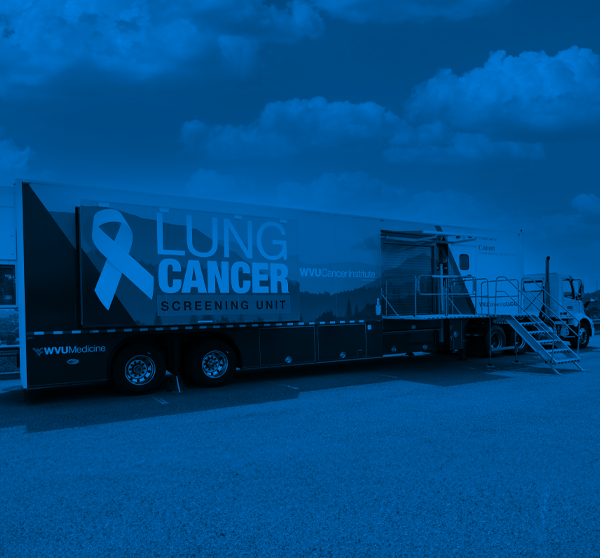
- LUCAS Mobile Lung Cancer Screening Program
- Prescription discharge delivery to and counseling at bedside
- Replacement for former State grants for hemophilia and prescription drug program
- Rosenbaum Family House
Resources
Download the 340B and the West Virginia University Health System fact sheet.