

Comprehensive Movement Disorder Center
The most advanced, innovative treatment for movement disorders.
What We Do
Our team at the WVU Rockefeller Neuroscience Institute Comprehensive Movement Disorder Center specializes in using the latest therapies, technologies, and innovations to deliver the best treatment plan to every patient.
Conditions we treat include:
- Ataxia
- Essential tremor
- Multiple system atrophy (MSA)
- Parkinson’s disease
- Restless leg syndrome
- Tourette syndrome
- Dystonia
- Huntington’s disease
- Myoclonus
- Parkinsonian disorders
- Tardive dyskinesia
- Wilson’s disease
Our clinic offers some of the most innovative therapeutic approaches available, including:
- Deep brain stimulation (DBS)
- High frequency focused ultrasound (HIFU)
- Botulinum toxin (Botox) injections
- Speech therapy
- Physical therapy and rehabilitation
Who We Are
More than 30 different diseases, affecting almost 40 million Americans, are identified as neurological movement disorders. Movement disorders originate deep in the brain, affecting both children and adults. Symptoms vary widely, making diagnosis sometimes difficult. Causes are often unknown but may include genetic and environmental factors, injury to the brain such as stroke, the side effects of medications, and others.
These disorders, which include Parkinson’s disease, essential tremor, myokymia, and restless leg syndrome, range from mild to severe, are usually chronic, sometimes progressive, and seldom curable.
Although many movement disorders are not life-threatening, they can significantly impair patients’ ability to function well and independently. Depression and other mental problems are often associated with movement disorders.
Essential Tremor vs. Parkinson's Disease
Learn more about the specifics of Essential Tremor and Parkinson’s Disease as Division Chief of the RNI Comprehensive Movement Disorder Center, Dr. Ann Marie Murray, explains each in detail, their differences, how we are diagnosing and treating each, and how we are getting people back to living their lives.
Meet some of our patients
Sue's Story: Deep Brain Stimulation for Parkinson's Disease
Sue Chapman will not be defined as a person with Parkinson’s Disease. She talks about her incredible care and treatment at the RNI and how deep brain stimulation (DBS) surgery helped her get her life back.
Dave's Story: Treating Parkinson's Disease
Dave Kolbe is from central Ohio (Columbus area), and has Parkinson’s disease. Dave found his way to the WVU Rockefeller Neuroscience Institute (RNI) after several subpar experiences with other neurologists. He met Dr. Ann Marie Murray, who took the time to learn about him and his goals of living with Parkinson’s.
Mary's Story: Deep Brain Stimulation for Essential Tremor
Mary Supcoe suffered from essential tremor for nearly 40 years. When it came to the point she could no longer do the things that brought her joy, like sewing and quilting, she and her husband, Chris, knew they had to find an answer. They found it at the WVU Rockefeller Neuroscience Institute (RNI). Mary had deep brain stimulation (DBS) surgery and regained her life back. Watch her amazing story.
Neurology stories
WVU Rockefeller Neuroscience Institute advances non-invasive method to enhance chemotherapy delivery for high-grade gliomas
Orchard Park Hospital signs letter of intent to merge with Wheeling Hospital
Ali Rezai, M.D., named Big 12 Faculty of the Year honoree
At the Forefront of Movement Disorders Treatments and Support
The WVU Medicine Comprehensive Movement Disorders Clinic’s multidisciplinary team provides world-class, personalized treatment tailored to each patient’s individual needs.
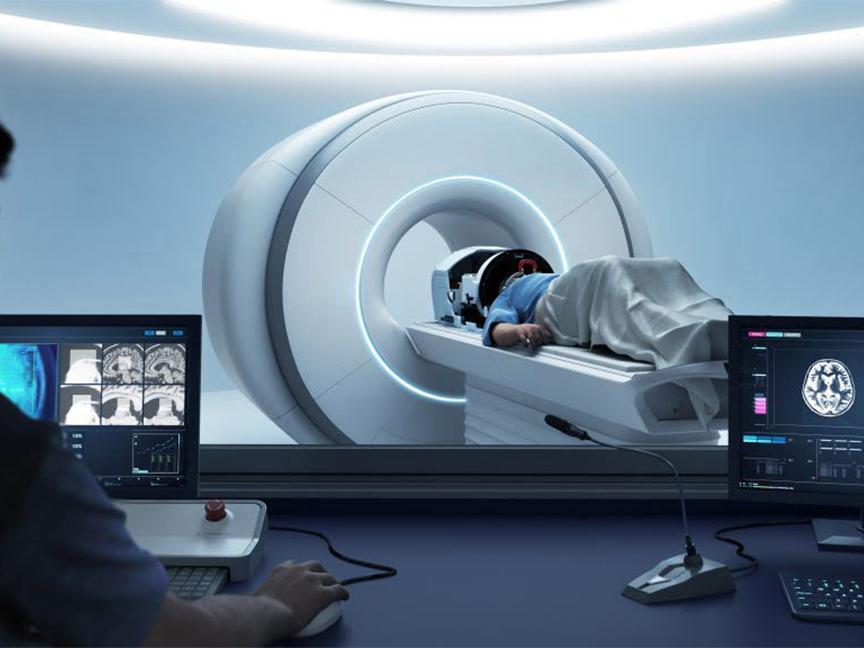
Non-Invasive Treatment for Essential Tremor
Our Comprehensive Movement Disorder Center is the only site in West Virginia, and one of only a few sites in the United States, utilizing MR-guided focused ultrasound – an FDA-approved treatment for essential tremor (ET) and tremor-dominant Parkinson’s.
- MR-guided focused ultrasound uses non-audible sound waves to treat symptoms with no incisions, brain implants, or radiation.
- The ultrasound waves are focused through the skull to create a small ablation, or burn, which reduces the tremor.
- During treatment, a small lesion will be made in the thalamus – the part of the brain that controls your tremor.
- The physician uses MRI images to view and assess the treatment area.
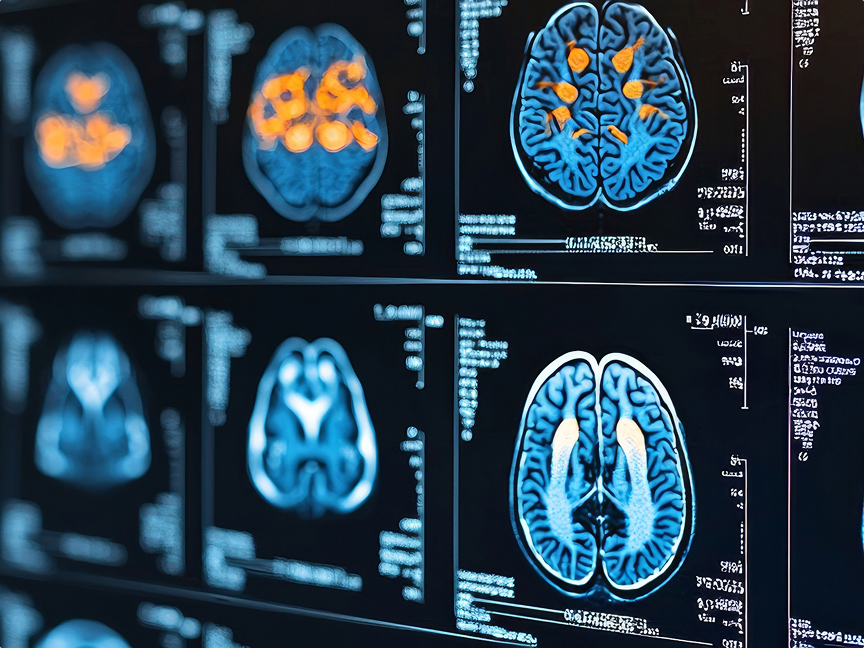
Deep Brain Stimulation (DBS)
DBS can help ease symptoms of movement disorders and decrease the amount of medicine needed for treatment.
The procedure is performed with a small incision to implant electrodes in certain areas of the brain to control abnormal impulses that cause the disorder’s symptoms.

Parkinson’s Disease Speech Clinic
RNI’s integrated neurological and speech disorder clinic provides comprehensive care to Parkinson’s disease patients, addressing and preventing complications associated with speech and swallowing problems.
While most patients with Parkinson’s disease experience speech and swallowing difficulties along the course of their disease, these problems tend to be underrecognized and undertreated. Prevention of speech worsening is needed in the early stages and treatment of Parkinson’s disease. Swallowing problems may lead to complications such as aspiration pneumonia.
Ninety percent of Parkinson’s disease patients will develop speech problems affecting:
- Daily communication with family and friends
- Speaking over the phone
- Professional interactions
The RNI Parkinson’s Disease Speech Clinic is supported by a community grant from the Parkinson’s Foundation.
Call 304-598-6127 for a Parkinson’s Disease Speech Clinic appointment.
Clinical Leadership
See all Neurology Faculty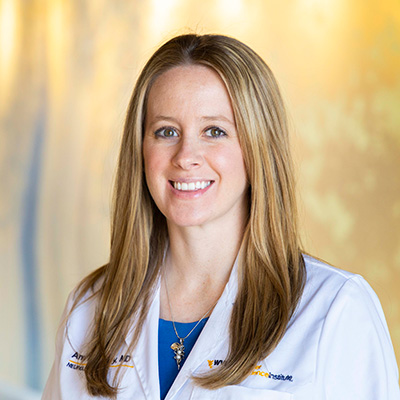
Office hours: Monday – Friday, 8 am – 5 pm
Referrals and appointment requests
If you need to refer a patient or schedule an appointment, please call 855-WVU-CARE or send an email to [email protected].
Consultations
If you are a healthcare provider and would like to consult with one of our movement disorder experts, please call (304) 598-4809 to speak with our referral specialist. You may also call our Medical Access Referral System (MARS) at (800) 982-6277.