

Transcranial Magnetic Stimulation (TMS) Program
The state’s only multidisciplinary specialty clinic offering this non-invasive treatment.
What We Do
The WVU Rockefeller Neuroscience Institute’s Transcranial Magnetic Stimulation (TMS) Program is the only multidisciplinary specialty clinic of its kind in the state of West Virginia. Our TMS program specializes in the use of non-invasive brain stimulation as an alternative or complementary treatment for several conditions such as:
- Treatment-resistant depression
- Obsessive-compulsive disorder (OCD)
- Post-stroke recovery
- Chronic pain
- Chronic tinnitus
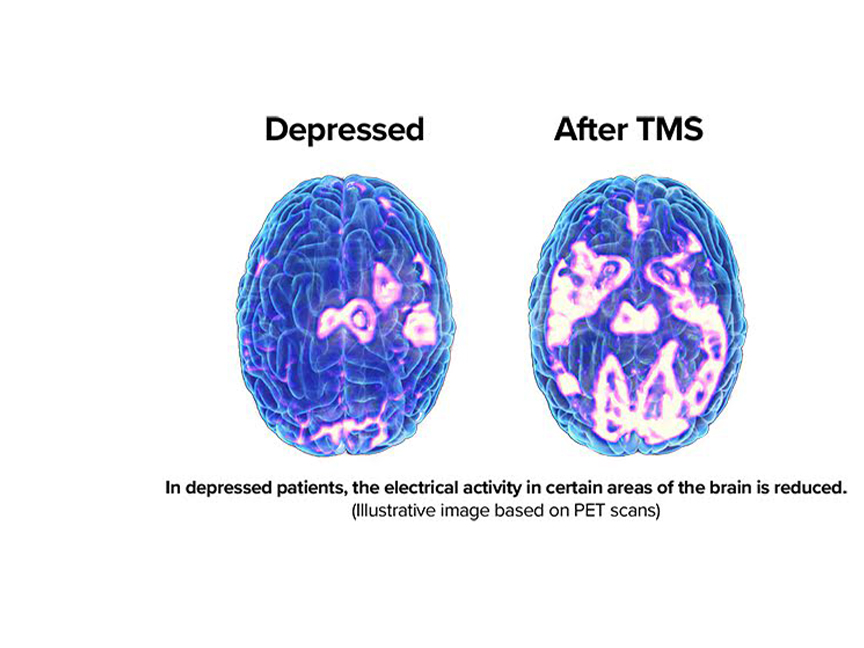
Non-Invasive Treatment
TMS has been used in various ways in neuroscientific and clinical research for more than 30 years. Since 2010, TMS therapy has been recommended by the American Psychiatric Association as a treatment for adults with major depression who have failed to respond to more than one antidepressant. TMS is also used to treat OCD in adults that have not seen success with other treatments.
TMS Therapy uses short pulses of magnetic energy to stimulate nerve cells in the brain. These magnetic pulses are delivered to the area in the brain responsible for emotional judgement and mood regulation.
TMS Therapy with Paul Neudling
Transcranial magnetic stimulation (TMS) therapy at the WVU Rockefeller Neuroscience Institute is used to treat patients with different medical needs. Paul Nuedling, a TMS patient, shares his journey on how TMS therapy has helped him with depression.
FAQs
What is TMS Therapy
- Brief, repetitive magnetic pulses stimulate brain cells and help normalize brain activity.
- The electromagnetic coil used is similar to the one used in an MRI.
- TMS does not require medications, sedation, or anesthesia.
- TMS is safe and has very few side effects.
What happens during TMS?
- Treatment sessions take place at the RNI Innovation Center, on WVU Medicine’s main Morgantown campus.
- Treatment sessions generally last 20-45 minutes.
- Patients are seated in a special chair, and an electromagnetic coil is placed on the head.
- Pulses activate nerve cells near the surface of the brain that communicate with nerves in deeper areas known to be affected by depression.
Does insurance cover TMS?
- Most insurance covers TMS, but some might require that specific criteria be met. TMS therapy is now covered by both Medicaid and Medicare.
- Our team will work with you and your insurance provider to determine if TMS is an option.
- Patients may self-pay, and costs are highly competitive when compared to other providers’ fees.
Clinical Leadership
See all Neurology Faculty
Office hours: Monday – Friday, 8 am – 5 pm
Referrals and Appointment Requests
If you need to refer a patient or schedule an appointment, please call 855-WVU-CARE or send an email to [email protected].
Consultations
If you are a healthcare provider and would like to consult with one of our memory health experts, please call (304) 598-4809 to speak with our referral specialist. You may also call our Medical Access Referral System (MARS) at (800) 982-6277.