
Orthopedics & Sports Medicine
The range of treatment provided by our orthopedic division spans sprains and broken bones, surgical intervention, reconstruction as well as managing disease processes and rehabilitation.
For more information or to schedule
an appointment call 304-797-6DOC.
We treat injuries and disorders of the bones, joints, muscles, and nerves that enable movement for adults and children. Our team provides diagnosis, non-surgical care, rehabilitation, and advanced surgical options including joint replacement, sports medicine, foot and ankle care, as well as hand and upper extremity services.

Understanding robotic technology for total knee replacement
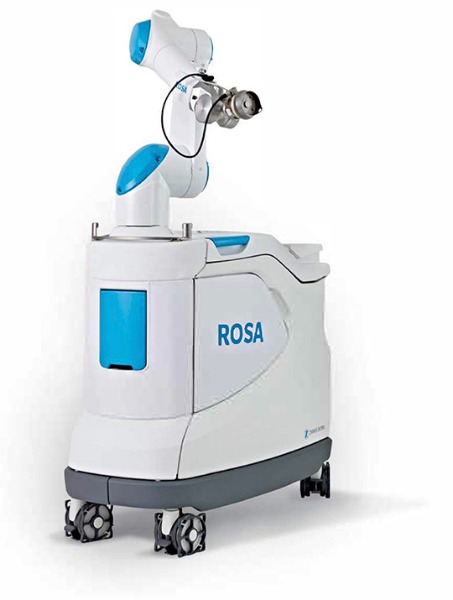
You're unique, and so is your individual anatomy. That's why Zimmer Biomet offers ROSA® Knee robotic technology. ROSA, which stands for Robotic Surgical Assistant, is designed to help your specially trained surgeon tailor the placement of your knee implant just for you. Here, we will explain what makes the ROSA Knee System unique, what to expect preoperatively, what will happen with ROSA Knee during surgery and what to expect after your surgery.
Arthritis in the knee joint
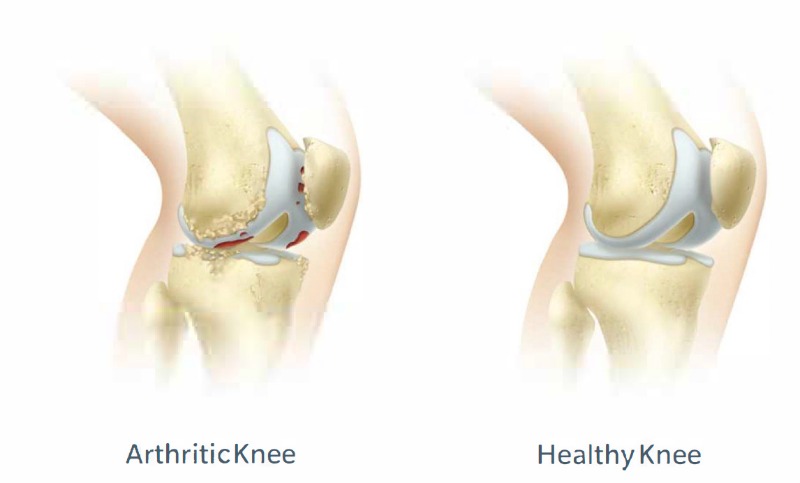
The knee is a hinge joint formed by the tibia (shinbone), femur (thighbone) and patella (kneecap). The ends of the bones in the knee joint are covered with cartilage, a tough, lubricating tissue that helps cushion the bones during movement.
Osteoarthritis, the most common form of arthritis, is a wear-and-tear condition that destroys joint cartilage and bone. It typically develops after years of constant motion and pressure in the joints. As the cartilage continues to wear away, the joint becomes increasingly painful and difficult to move. If conservative treatment options fail to provide relief, your surgeon may recommend total knee replacement using ROSA Knee robotic technology.
Getting a precise knee implant fit is important to your comfort and overall experience following knee replacement surgery. ROSA Knee uses data collected before and during surgery to inform your surgeon of many details related to your unique anatomy that may affect your implant fit. By using this data to make more informed decisions, your surgeon is able to plan for and carry out a personalized surgery based upon your individual needs.
ROSA Knee Robotic Technology
Before surgery
Your preoperative experience will be like that of most total knee patients. But, unlike traditional knee replacement methods, with ROSA Knee, a series of x-rays may be used to create a threedimensional (3D) model of your knee anatomy. This 3D model will enable the surgeon to plan many specifics of your knee replacement prior to your surgery.
During surgery
The surgical procedure using ROSA Knee is similar to traditional total knee replacement, but with a robotic assistant. Your surgeon has been specially trained to use ROSA Knee in order to personalize the surgical approach for your unique anatomy. It's important to understand that the robot does not operate on its own. That means it does not move unless your surgeon prompts it to. Your surgeon is still in the operating room the entire time and is making all of the decisions throughout your surgery.
During your procedure, ROSA Knee utilizes a camera and optical trackers attached to your leg to know exactly where your knee is in space. Think of it like a very detailed global positioning system (GPS) that you might use in your car. If your leg moves even a fraction of an inch, the robot can tell and adjusts accordingly. This helps ensure that the plan your surgeon put into place is executed as intended. Throughout your surgery, ROSA Knee provides your surgeon with data about your knee. This information, combined with your surgeon's skill, helps them know how to position your implant based on your unique anatomy.
After surgery
Following surgery, you will be hospitalized based upon the recovery plan your surgeon decides is best for you. This hospitalization may range from one to three days. Recovery time varies, but most people should be able to drive after two weeks, garden after three to four weeks, and golf after six to eight weeks. Your surgeon will tell you when and what activities you can return to, and what activities to avoid.
Complications
While uncommon, complications can occur during and after surgery. Some complications include, but are not limited to, infection, blood clots, implant breakage, malalignment and premature wear, any of which can require additional surgery. Although implant surgery is extremely successful in most cases, some patients still experience stiffness and pain. No implant will last forever, and factors such as your post-surgery activities and weight can affect longevity. Be sure to discuss these and other risks with your surgeon.
There are many things that your surgeon may do to minimize the potential for complications. Your surgeon may have you see a medical physician before surgery to obtain tests. You may also need to have your dental work up-to-date and may be shown how to prepare your home to avoid falls.
Summary
The decision to have surgery is sometimes difficult. We hope that this information has helped you understand the ROSA Knee System so that you can make the best decision for yourself. This information is not intended to replace the experience and counsel of your orthopedic surgeon. If you have any further questions, please speak with your orthopedic surgeon.
Important Note: This is intended to provide an overview of knee replacement surgery and should be reviewed with your doctor. It does not include all of the information needed to determine eligibility for knee replacement or for the proper use and care of artificial knee replacements. Please consult your surgeon for more information. Information may also be obtained by calling the toll-free number or visiting the website. The toll-free number can also be used to obtain complete product contraindications, warnings, precautions, and possible adverse effects. Individual results may vary. Your results will depend on your personal circumstances. How long a knee replacement will last varies from patient to patient. It depends on many factors, such as the patient's physical condition, activity level and body weight, and the surgical technique. Replacement joints are not as strong or durable as a natural, healthy joint, and there is no guarantee that an artificial joint will last the rest of a patient's life. All knee replacements may need to be replaced at some point.
This device is available only on the order of a physician.
Our Specialties
PERSONAL BONE AND JOINT CARE
At any age, an orthopedic issue can keep you from the doing the basic things that you love to do. Using advanced techniques, our team of orthopedic specialists will provide you with a personalized treatment plan that will return you to a happy and active life.
JOINT RECONSTRUCTION
As we age, our joints experience normal wear and tear and become painful, limiting activity and affecting movement. Joint reconstruction surgery is for those patients where conservative methods no longer work. Joint replacement surgery is for patients whose previous orthopedic surgeries are now failing and need partial or total joint replacement, implants or bone grafting.
FOOT AND ANKLE
Foot and ankle physicians focus on treating injuries or conditions affecting the ankle and foot. They also deal with occupational and athletic injuries, trauma, rheumatoid and degenerative arthritis, congenital deformities, neuromuscular diseases and diabetes.
HAND AND UPPER EXTREMITY
Hand and upper extremity orthopedic doctors treat the hand and arms and include reconstructive procedures to address replantation; skin, vascular, nerve, tendon and bone reconstruction; tumors; rehabilitation due to arthritis; stroke effects; cerebral palsy; congenital conditions and work related disorders like carpal tunnel syndrome.
SPINE
Spine surgeons focus on the spine provide diagnostic evaluations and treatment for congenital, acquired and traumatic disorders. They also provide professional services to address conditions such as scoliosis, herniated discs in the neck, lower back pain, spinal fractures and other back-related conditions.
SPORTS MEDICINE
Sports Medicine doctors specialize in treating a broad range of musculoskeletal injuries resulting from athletic events, training and conditioning. They work closely with trainers and rehabilitation specialists to monitor patient progress and get patients back on their feet quickly.
PEDIATRIC ORTHOPEDICS
Physicians specializing in pediatric orthopedics treat all varieties of pediatric orthopedic conditions resulting from trauma or congenital causes. They are experienced in managing clubfeet and other pediatric foot deformities. They also treat scoliosis, hip problems and neuromuscular conditions that include spina bifida, cerebral palsy and muscular dystrophy.
MUSCULOSKELETAL OBCOLOGY
Musculoskeletal Oncologists focus on the diagnosis and treatment of medical conditions such as cancer occurring in the bone and soft tissue of adults and children as well as reconstructive methods to save limbs.
ORTHOPEDIC TRAUMA
Orthopedic surgeons specializing in traumatology are skilled in treating major and acute musculoskeletal injuries. Some of the procedures they routinely perform include replanting major limbs, stabilizing fractures of the spine and pelvis as well as complex reconstruction.
COMMON ORTHOPEDIC PROCEDURES
Orthopedic surgeons perform a variety of surgical procedures to correct deformities, repair fractures, and manage disease. More common procedures include:
Arthroscopy – Utilizes specialized cameras and equipment to see into a joint to diagnose and treat problems.
Fusion – Bones are fused together using internal devices (metal rods) and/or bone grafts.
Internal fixation – A procedure that puts fractured or pieces of bone together in the correct position using metal plates, pins or screws.
Joint replacement – Uses an artificial joint (prosthesis) to replace joints damaged by injury or arthritis.
Osteotomy – To correct bone deformities by cutting and repositioning the bone.
Soft tissue repair – The mending of soft connective tissue including torn tendons and ligaments.
APPOINTMENTS
304-797-6DOC
LOCATION AND DIRECTIONS
Orthopedic Clinic
Weirton Medical Center
601 Colliers Way, Weirton, WV 26062
Stephen Alatis, DO, Ryan Falbo, DO and Adam Cook, DO
651 Colliers Way, Suite 309, Weirton, WV 26062
304-797-6560
Hours: Monday – Friday, 7:30am – 4pm
Stephen Alatis, DO
2315 Sunset Boulevard, Suite C, Steubenville, OH 43952
Charles Capito, MD
703 Colliers Way, Weirton, WV 26062
304-723-3355
Hours: Monday – Friday, 8 am – 4 pm