Refractive Surgery
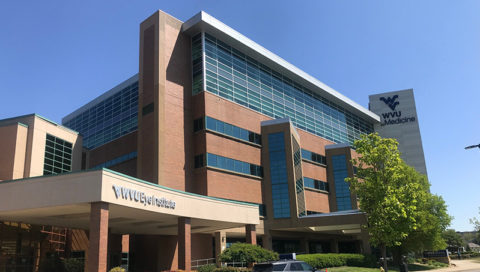
The WVU Eye Institute ophthalmology team uses the latest technology to deliver precise, life-changing laser vision correction surgeries.
We specialize in personalized treatments designed to restore vision and ensure complete patient satisfaction.
The ophthalmology team at the WVU Eye Institute offers laser treatments using the latest technology to correct refractive errors, including astigmatism, nearsightedness, and farsightedness.
Laser Vision Correction
Laser vision correction surgery has been shown to reduce dependence on glasses and contacts. This technology also enables accelerated healing and recovery, and reduced dryness, pressure, and irritation of the eyes after surgery. More than 95 percent of our patients who undergo laser vision correction with our highly advanced treatment system, WaveLight® Refractive Suite, achieve 20/40 vision or better.
Laser-Assisted In-Situ Keratomileusis (LASIK)
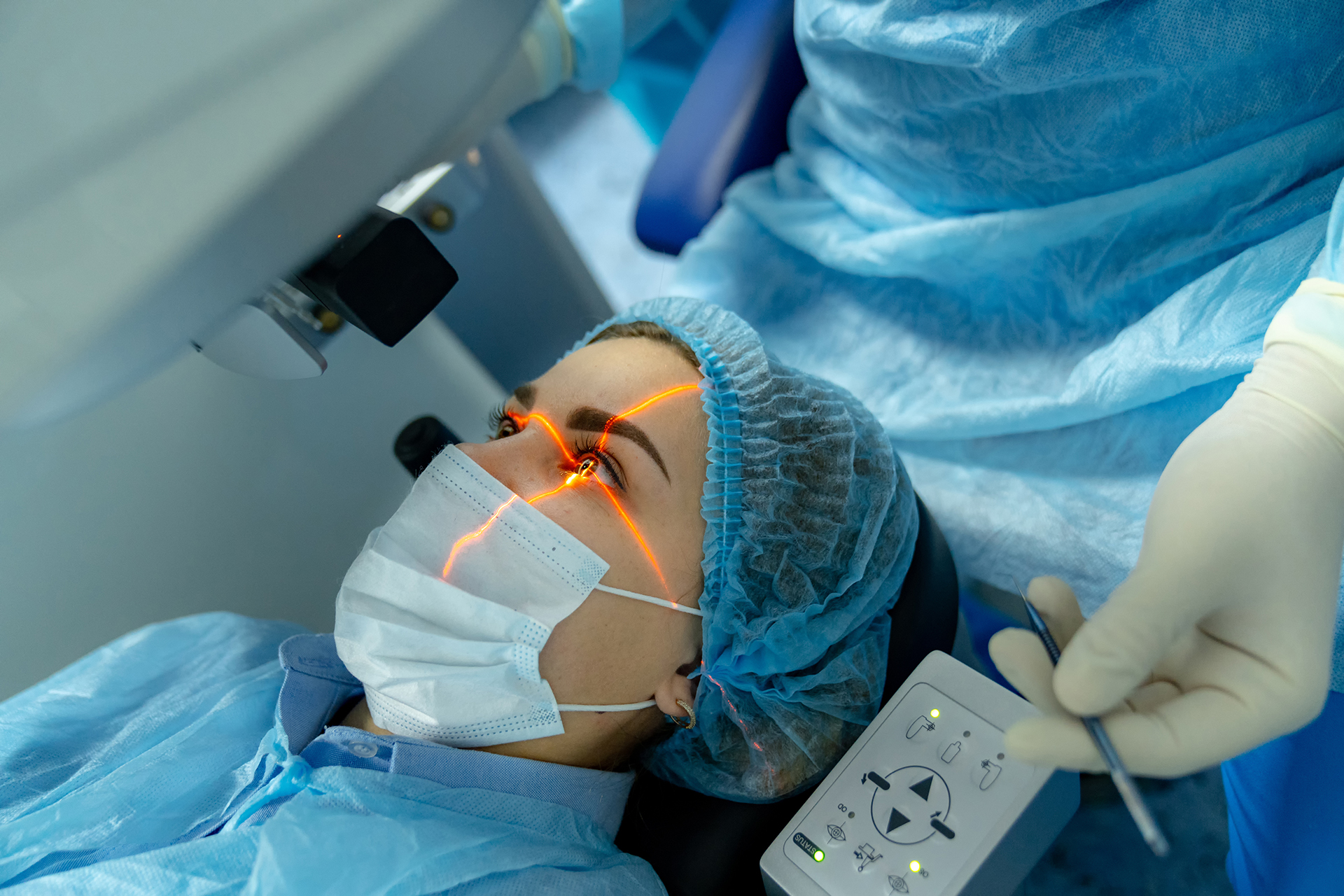
LASIK is a blade-free, outpatient vision correction procedure that uses laser energy to reshape the cornea and improve vision. LASIK is the most performed vision correction surgery. Using the most advanced technology, the WaveLight® Refractive Suite, this procedure involves creating a thin flap by the laser, which is retracted then repositioned following the procedure. This approach provides faster healing and vision recovery.
Photorefractive Keratectomy (PRK)
PRK surgery is an alternative to LASIK where the laser vision correction is delivered to the cornea surface without the creation of a flap. PRK can be a better option for people with thin corneas who cannot spare tissue for flap creation or whose occupations may involve possible eye trauma, such as law enforcement officers, military personnel, and martial artists. The ultimate vision outcome of PRK is equal to LASIK, though recovery may take longer.
Phototherapeutic Keratectomy (PTK)
PTK is a minimally invasive, outpatient laser procedure that uses an excimer laser to remove surface-level corneal scars, irregularities, or dystrophies, aiming to improve vision and reduce pain. It acts as a bridge between medical and surgical management, offering a quicker recovery than traditional transplants, with full healing taking 3-6 months.
Laser Vision Treatments and Services
The WVU Eye Institute’s laser eye surgery team performs a detailed evaluation of the optics of your eye to deliver precise laser vision correction surgery. Our testing devices also enable our doctors to choose the safest procedure to correct your vision. We offer a variety of laser vision correction surgeries.
LASIK FAQs
If you have additional questions about LASIK, please call the WVU Eye Institute at 304-598-4913.
Who is a good candidate for LASIK?
To be considered a candidate for laser vision correction surgery, you must be at least 18 years old, have healthy eyes, and have a stable eye prescription for the last 12 months. Certain eye and medical conditions can make a patient unsuitable for LASIK surgery.
How does LASIK work?
The WVU Eye Institute ophthalmology team uses the WaveLight® Refractive Suite to perform LASIK surgery, which consists of two laser devices and a swiveling patient bed to reduce transition time between the lasers. Both eyes are treated during the procedure. The WaveLight® Refractive Suite is designed to optimize the time and accuracy of a LASIK procedure, while providing the most accurate refractive outcome.
Is LASIK really painless?
For many patients, LASIK is indeed painless. Anesthetic drops numb the eye prior to the procedure. Some patients may experience temporary symptoms, such as scratchy or watery eyes, after the procedure, but this usually disappears within 24 hours. Keeping your eyes closed and using medication drops as instructed can help minimize any discomfort. After laser vision correction surgery, a bandage contact lens is applied to speed healing.
What are the risks of LASIK?
Your safety is our highest priority. While LASIK has a very high success rate, like any surgery, there is risk associated with it. Some patients experience dryness in the eyes, which is usually relieved with eye drops and can disappear over time. In a very small number of people, vision can worsen rather than improve. Your surgeon will go over the potential risks of refractive laser surgery and measures taken to avoid them. Be sure to ask all your questions before surgery.
How much work will I miss?
Most patients return to their normal activities the day after the procedure. The doctor can give you more details on what to expect when you come in for an evaluation.
Do the results of LASIK last?
LASIK is considered to be a permanent procedure; however, refractive laser surgery will not prevent any age-related conditions, such as the need for reading glasses or cataracts. In a small number of cases, eyes do change over time and develop a new prescription. If this happens, you may be able to be treated with LASIK again.
Does insurance cover LASIK?
Most insurance companies consider laser eye surgery to be an elective surgery, and it is not usually a covered benefit. However, we encourage you to call your insurance company and ask about coverage for LASIK.
How long is the procedure?
You will be at the WVU Eye Institute approximately an hour and a half. The time in the surgery suite with the surgeon is usually about 15-20 minutes. Both eyes are treated during the procedure, and the actual laser treatment time is about a minute per eye.
What if I blink during the procedure?
Your eye will be held open with a holder supporting your lid so that you cannot blink. The holder is placed on your eye before the treatment and removed after.
Why must I stop wearing my contacts before my LASIK evaluation appointment and before LASIK?
Contact lenses can change the shape of the cornea similar to how a watchband can make a skin imprint on your wrist. If your eyes are examined too soon after taking out your contact lenses, some of the eye tests could give inaccurate results. You should discontinue wearing soft contact lenses two weeks prior to the pre-operative measurements and laser surgery. Toric (astigmatism-correcting) contact lenses should be discontinued three weeks prior to pre-operative measurements and laser surgery. Rigid gas permeable contact lens wearers should discontinue wearing lenses four weeks prior to pre-operative measurements and laser surgery. Our doctors will advise you if they suspect your corneas have not returned to their natural shape after removing your contact lenses.
Faculty
See all faculty
Thomas Mauger, MD

Lingo Lai, MD

Lena Chen, MD

Evan Frigoletto, MD
Locations